 info@Fullcores.com
 My Inquiry
 My Account
 Upload BOM


Redefining Data Transmission and Computing
1/15/2025 5:55:23 PM
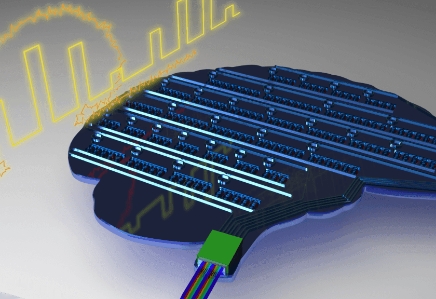
In an era dominated by data-driven technologies, a silent revolution is underway in the manipulation of light. Programmable photonics, a field that enables dynamic control over light signals, is rapidly emerging as a key technology, transforming everything from high-speed data communication to complex computational tasks. This technology leverages the unique properties of photons-massless, chargeless particles of light-to achieve unprecedented performance in information processing.
The Fundamentals of Programmable Photonics
At the heart of programmable photonics lies the ability to configure optical circuits in real-time. Traditional optical systems rely on fixed components, limiting their adaptability to changing requirements. In contrast, programmable photonic devices use microelectromechanical systems (MEMS) or electro-optic materials to alter the path, phase, and intensity of light. Lithium niobate, for example, has become a star material due to its high electro-optic coefficient. Integrated lithium niobate modulators can switch light signals at speeds exceeding 100 Gbaud, enabling ultra-high-speed data transmission.Another breakthrough involves the use of silicon photonics platforms. By integrating photonic components onto a silicon chip using standard semiconductor manufacturing processes, researchers have created compact and cost-effective solutions. These chips can house thousands of optical elements, including waveguides, splitters, and phase shifters, all of which can be programmed to perform specific functions. A recent study demonstrated a silicon photonic chip capable of performing 1,000 parallel optical computations in under a microsecond, showcasing the immense computational potential of this technology.

Technological Advancements Driving Innovation
The development of reconfigurable optical interconnects represents a significant leap forward. In data centers, where vast amounts of data need to be transferred between servers, traditional electrical connections face limitations in speed and energy efficiency. Programmable photonic interconnects, however, can transmit data at terabit-per-second rates with minimal power consumption. Using wavelength-division multiplexing (WDM) techniques, a single optical fiber can carry multiple data streams simultaneously, each operating at different wavelengths. Recent prototypes have achieved aggregate data rates of over 100 Tbps, effectively future-proofing data center infrastructure.In the realm of computing, photonic neural networks are emerging as a promising alternative to traditional electronic-based AI systems. Photons can travel at the speed of light and interact with each other without interference, making them ideal for parallel processing. Programmable photonic neural networks can be reconfigured to perform different AI tasks, such as image recognition or natural language processing, by simply adjusting the optical paths within the system. A recent experiment showed that a photonic neural network could classify handwritten digits with 98% accuracy, all while consuming only a fraction of the energy used by electronic counterparts.
Real-World Applications and Future Prospects
The telecommunications industry is among the first to benefit from programmable photonics. 5G and future 6G networks rely on high-capacity, low-latency connections, and photonic technologies are essential for meeting these demands. Programmable optical transceivers can adapt to varying network conditions, optimizing signal transmission in real-time. In addition, they enable the deployment of virtualized network functions, allowing service providers to quickly reconfigure their networks to accommodate changing traffic patterns.In healthcare, programmable photonics is revolutionizing diagnostic tools. Optical coherence tomography (OCT) systems, which use light to create detailed images of biological tissues, can now be made more versatile with programmable components. By adjusting the optical properties of the system, doctors can obtain high-resolution images of different tissues, aiding in the early detection of diseases such as cancer.
Looking ahead, the integration of programmable photonics with other emerging technologies, such as quantum computing and edge AI, holds even greater promise. As researchers continue to push the boundaries of what's possible, this technology is set to reshape the technological landscape, offering faster, more efficient, and more adaptable solutions for a data-centric world.
Related information



- 4,000+ Daily Average RFQ

- 12,000,000+ SKUs

- 2,900+ Worldwide Manufacturers

- 9,000+ ㎡ In-stock Warehouse


